
Happy October.
Who decides what a place keeps, and what happens to everything that doesn't make the cut?
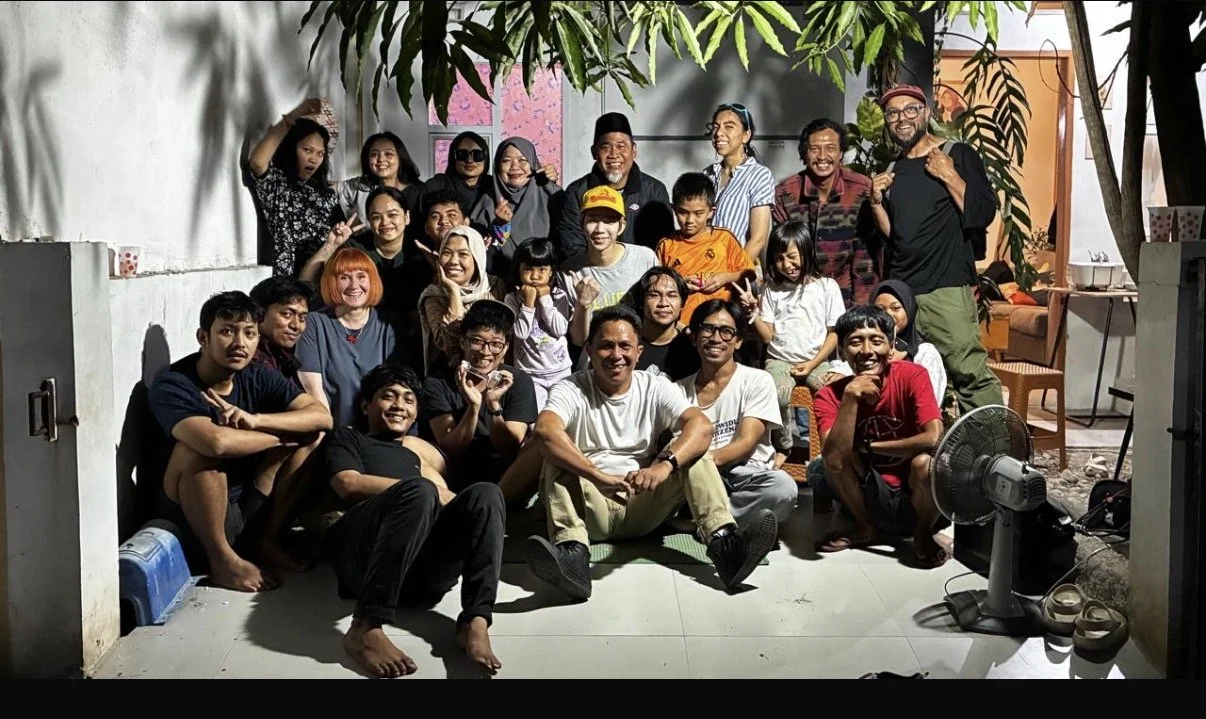
September was spent a long way from the office. Ten days in Makassar for the first residency of Archives of Change, then nine in Taiwan, building on connections we started three years ago. Two places with very little in common - different states, different economies, different centuries of interference - and the same question waiting in both. Who decides what a place keeps, and what happens to everything that doesn't make the cut?
Archives of Change
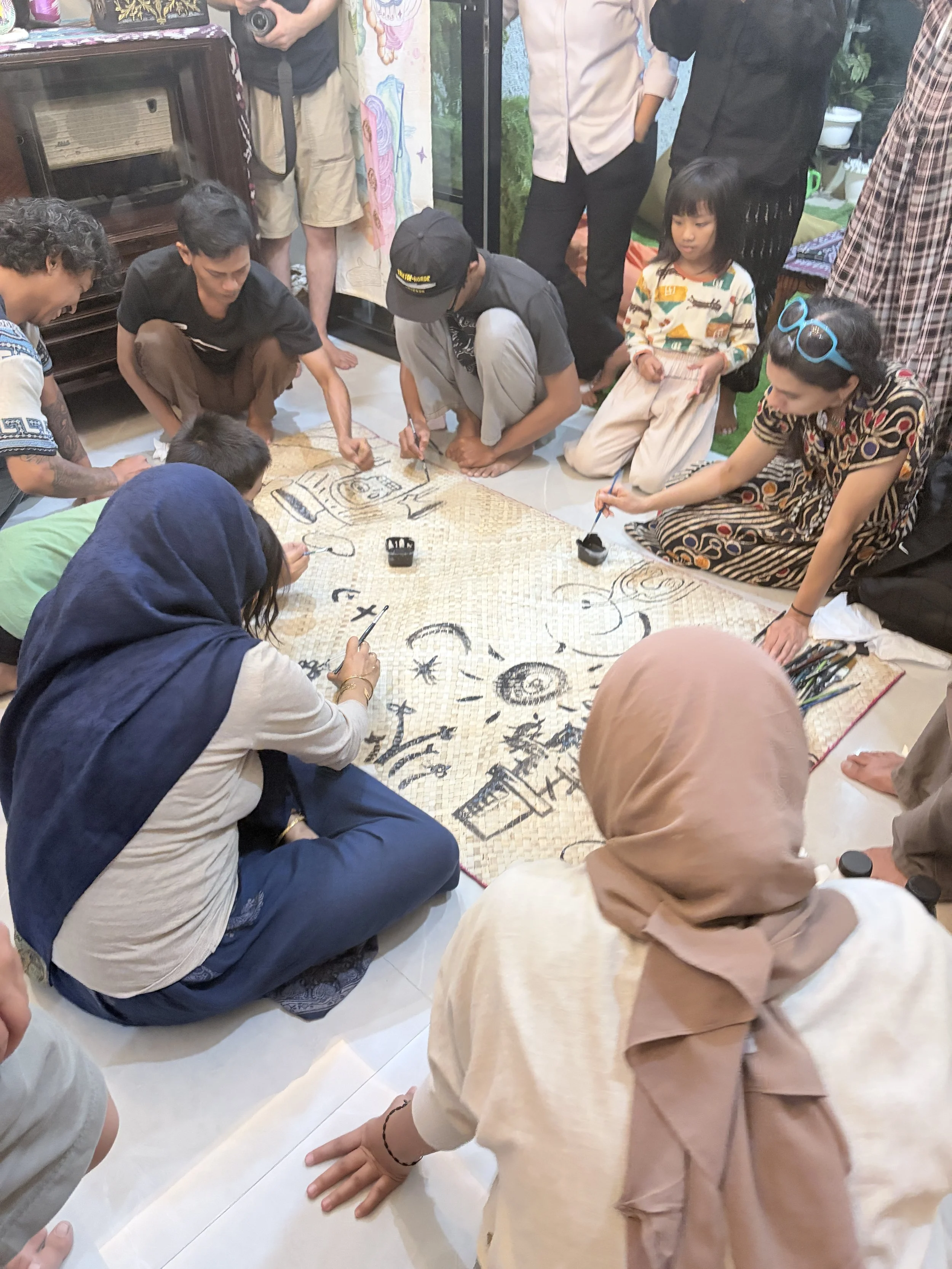
Archives of Change is a UK-Indonesia project with Musyawarah Arsip (MUAR) and Revoluton Arts in Luton, supported by the British Council's Connections Through Culture programme. We built the residency to be slow. Long conversations, shared meals, extended visits, coffee that took as long as it took, and enough unstructured time for the questions to change shape rather than get answered. A good deal of it happened in people's houses, including the house where Riwanua itself began. That turned out to be the method rather than the setting.
The residency brought together two artists from Luton and 3 collectives from Indonesia.We arrived with a definition of an archive and came home with a harder one. A private collection assembled from house clearances, holding folders of passports and marriage certificates belonging to people who had moved, or left, or died - somebody decided each of those was worth keeping, and it was never the person they belonged to. La Galigo, the Bugis epic, whose largest surviving manuscript was written out in the 1850s by Colliq Pujié, a woman of the Tanete court, during her own exile at Dutch hands; it now lives in a Dutch university library and returned to Makassar in 2017 as data, a hundred and sixty years after it left as paper. Cave paintings in the karst an hour outside the city, at least fifty thousand years old, of a people who have left no other trace - the only evidence they existed is the thing currently flaking off the wall.
Three things we're carrying forward. An archive is an act of authorship, not a neutral store, and any practice calling itself community-led has to be straight about who is doing the choosing. Multiple custody is possible - the assumption that a record or an object has one correct home is a particular inheritance rather than a universal truth, and there are working alternatives. Non-extractive is a condition rather than a method: we wrote it into the framework as everyone does, and it became real because of generosity we could not have required.
Phase two brings Indonesian artists to Luton. That's the part that tests the project. It isn't difficult to be a good guest….
From Indonesia to Taiwan
Nine days, mostly meeting artists, curators and institutions, working out where a partnership could honestly sit.
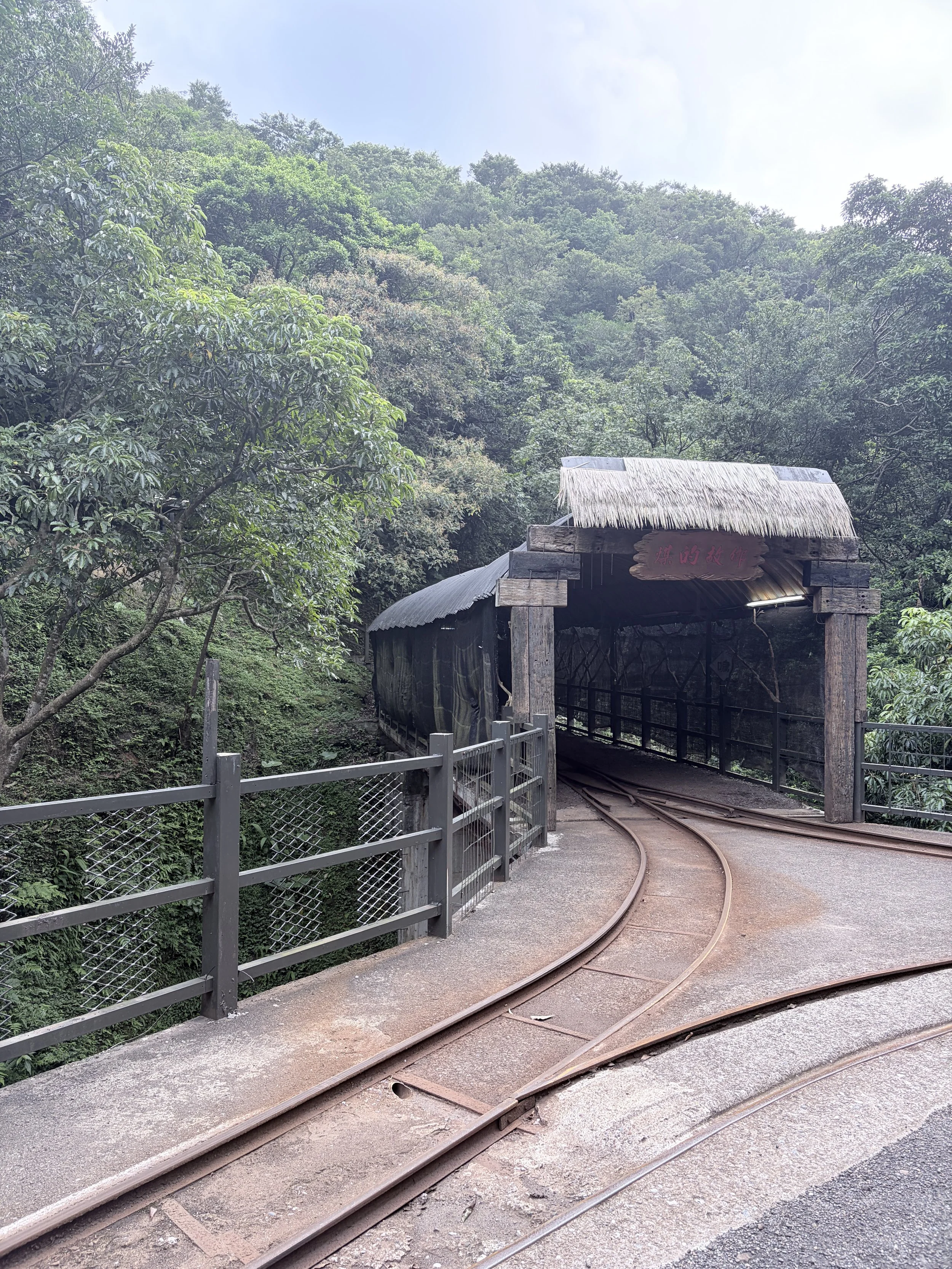
Thirty minutes out of Taipei on the train we went to Houtong, a coal town that closed in 1990. There are two museums there, two hundred metres apart. The first is the old coal preparation plant, restored by New Taipei City over three years and reopened in 2022 - beautifully done, and described in the city's own English text as re-presenting the glamour of Houtong's mining history. The second was set up in 2019 by four retired miners using their own pension money, because in their words the government had long neglected this chapter. They guide it themselves. One of them went underground at fourteen and worked thirty years. The sign they put up reads: in the pit, stay alert for yourself, for the mine, for your family.
We have stood in the Durham version of this. Different rock, different century, the same two institutions - the funded one with the lighting and the machinery, and the volunteer one with the men who were actually down there. The same argument about whether the story is pride or loss. What Houtong does that we haven't seen done as well at home is refuse to choose: both are open, both are free or close to it, and a visitor gets both in an afternoon whether they meant to or not.
The other conversation was about money. A curator described wanting a building with rooms, residency space and a kitchen, so that trading could subsidise the practice instead of the next application - and then worried aloud about becoming too money-minded. We have had that exact conversation three times this year. It's the Playhouse in Horden. It's our hosts in Makassar talking about a coffee shop that employs people and returns a profit to the work. It's half the UK sector discovering the phrase an asset to sweat.
What was striking is that Taiwan is running both experiments at once. A generation of collectives formed since 2019 has largely walked away from public funding on principle - one operates on three no's, no subsidies, no graduation shows, no tenure shows; another puts it as the more comprehensive the subsidy system, the more constraints it generates. Meanwhile the national institutions are being constituted as arm's-length corporations with self-generated income targets, and the National Theatre and Concert Hall has gone from thirty per cent self-generated to forty-eight. Trading income chosen inside a small collective looks like autonomy, and the people doing it describe it that way. Trading income imposed on a public building as a ratio it has to hit gets described as pressure. That distinction seems worth holding on to.
At the New Taipei City Art Museum, a photography show built around a word left untranslated in English: minjian - the space between the official and the non-official, everyday life and the circulation of images through it. We had spent the previous fortnight in Indonesia on exactly that gap. Here was a curator using a word his own language already had, and hanging a hundred years of photographs inside it. Brilliant!
Want to hear more?
There's a lot more of this than a newsletter can hold - the cats of Houtong and what happens when the thing that brings people isn't the thing the place is about; Toraja and what a funeral costs in two countries; the fort on the Makassar seafront that still carries the name of the admiral who took the city. Longer notes from both trips, plus essays on the sector, are going up on Sud's Substack.
Sign up there if you'd like the fuller version, including the bits that don't resolve neatly.
The Ragged Trousered Philanthropists
Autumn brought Robert Tressell's century-old story of working people, hardship and hope to Ensemble 84's Playhouse in Horden - staged in a place that knows its themes in its bones. It follows Hamlet and Pits, People and Players, and it's further proof of what grows when culture is built to last rather than staged and struck.

AGAIN
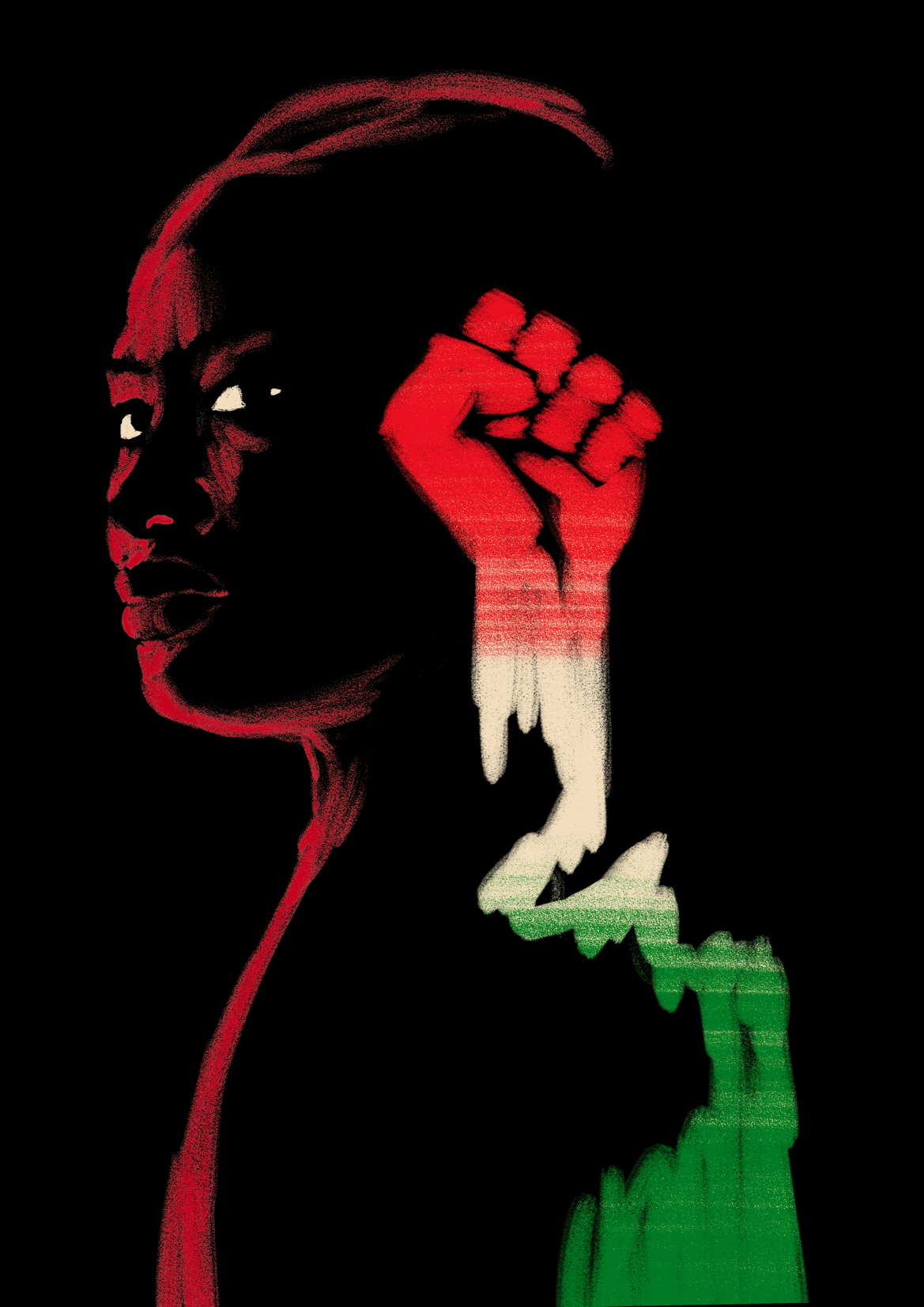
Three years in the making, with its share of delays along the way, AGAIN finally opens in Doha later this month. It’s a new piece of music theatre that brings life under apartheid in South Africa and life under occupation in Palestine onto the same stage, through words, choral song and movement. The idea began with writer and historian Tariq Ali. At its heart is the writing of Gaza-based author Sondos Sabra, drawn from her diaries in Voices of Resistance: Diaries of Genocide (Comma Press).
Commissioned by Qatar Museums.
Abdul Aziz Nasser Theatre, Souq Waqif, 27–31 October.
The NPO year, and an open offer
The Arts Council's National Portfolio round is on us, with guidance out and the application window opening this month. We're working with a handful of organisations on their thinking - not writing their bids, but being the person in the room who asks the awkward question early, while there's still time to do something about it. If you're in the middle of it and want an ear, get in touch. Sometimes it helps to say the thing out loud to someone who isn't on your board.
As ever, thank you for following the work.
Sud, Giulia, Jodie and Lia
Third Version Creative